
It's A Battlefield
Starmer, Epstein, Trump and the stench of decay.

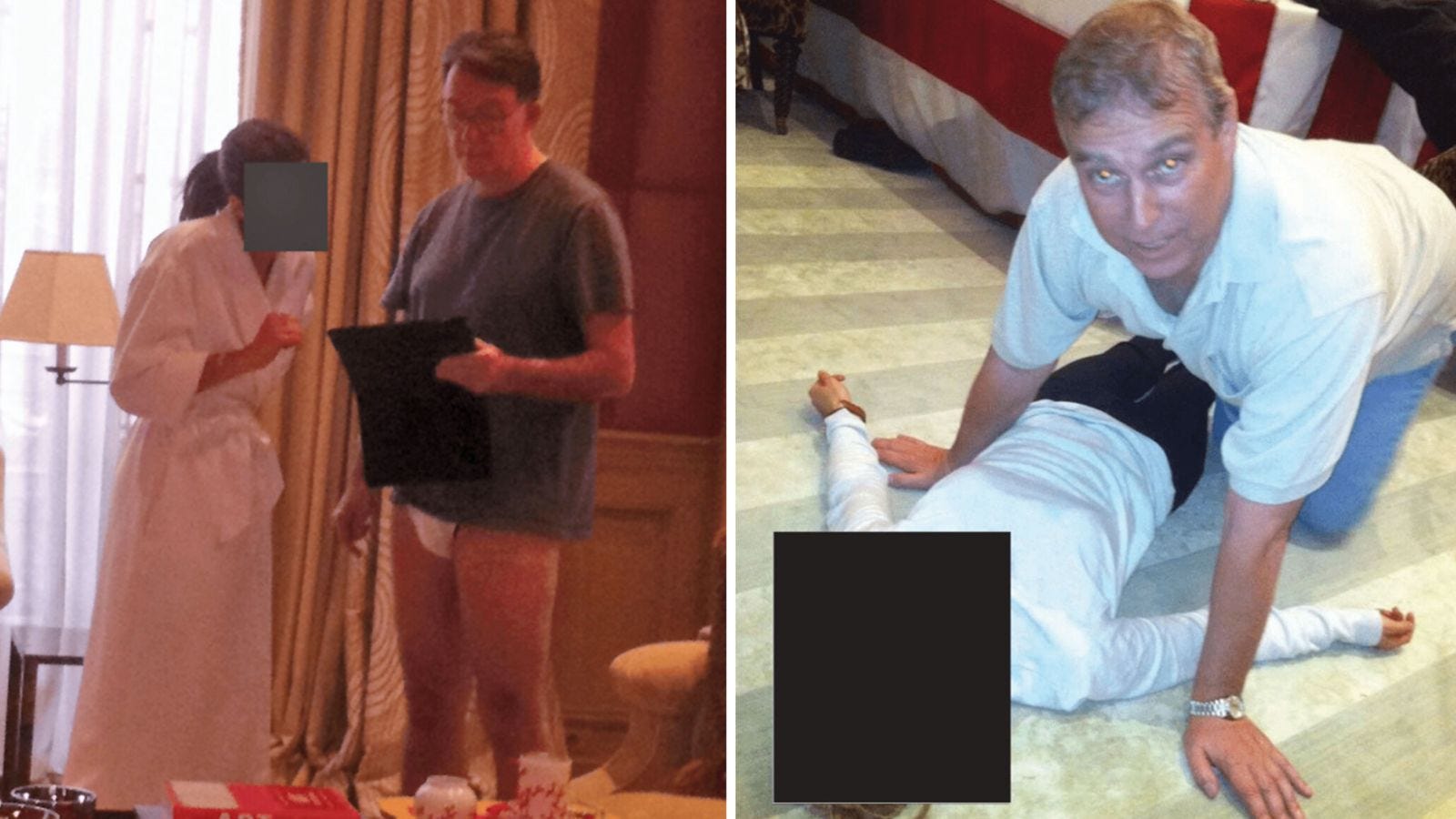
When, early in Graham Greene’s 1934 novel, It’s A Battlefield, a private secretary declares “It’s a battlefield”, it is in reference to Parliament, after the Home Secretary has a hard time in the House of Commons. Keir Starmer would surely concur after yesterday’s bloodbath. Already a weak and unpopular Prime Minister, he is now on borrowed time.
If he had not folded under pressure from his own MP’s over the release of documents relating to Peter Mandelson’s appointment he would have lost last night’s vote and would be gone already. As it is he fights on. To face a by-election at the end of the month, then local elections in England and devolved elections in Wales and Scotland, only weeks later. Bloody battles are imminent, but for Starmer the war is nearly over.
The Epstein files and all the related scandals are at once shocking but not surprising. The scale of the depravity and corruption among political and financial elites is shocking. It turns out stories of rich and powerful pedophile rings, once considered strictly for the whacky fringes of the internet and easily dismissed as conspiracy theories, such as QAnon or Pizzagate, were wrong only in their underestimation of the depth of evil at the core of the global elite.
The revelations are not surprising in the sense that deep down we know we live in an age where the rich and powerful are placed on a pedestal. Rich people are famous and influential just because they are rich people. Donald Trump is perhaps the best example of this. Someone who rose to cultural prominence only because he was, according to himself, super wealthy. One of the reasons he was elected President was because people, thoroughly sickened by politicians, were convinced that maybe it was time to let businesspeople run the government. Who better than, according to himself, the ultimate dealmaker?
For decades it has been known that Donald Trump is not only rich he is also immoral. A man accused of numerous sexual assaults, known to be a friend of Epstein and other convicted abusers, as well as someone found guilty of corruption and known to be a complete stranger to the truth. But this scandal is not just about the United States or one or two individuals. It is about something rotten that has eroded what George Orwell called ‘common decency’ in our society over the last 50 years. The cult of ‘greed is good’. Trump, Epstein, Mandelson are all symptoms of this sickness.
The politics of Thatcher and Reagan were seamlessly adopted by Clinton and Blair. Indeed, it was Peter Mandelson who told a US industrialist in California in 1998, that he was "intensely relaxed about people getting filthy rich.” The political class, left and right, across the West embraced this outlook. They abandoned the working class, destroyed the national industrial base, privatised public services, and wrecked both social infrastructure and public confidence in institutions. While being in the deep embrace of the ‘filthy rich’. Irrespective of how immoral and depraved they were. Let us remember Mandelson was appointed Ambassador to the US because he was friends with these people. Because he was the ‘Prince of Darkness.’
If politicians read Scottish philosopher Adam Smith (rather than just quoting him) they would have known there is a connection between these two conditions. The pursuit of ‘getting filthy rich’ and the lack of ethics. Worshipping the wealthy, or being ‘intensely relaxed’ about them, leads to the ‘corruption of moral sentiments’, according to Smith. Even a cursory look at the Epstein files can confirm the theory.
But politicians don’t read Smith. Which reminds me of Jean-Paul Sartre’s observation that “colonial administrators are not paid to read Hegel.” No, the political class do not excel at moral philosophy, or political theory, or history. Professional politics is a career choice for people who like process (being more upset at vetting procedures than pedophiles), speaking to audiences (but not listening) and networking (especially with the ‘filthy rich’). Professional politics does not create narcissistic sociopaths but it does attract them. Perfect prey for an Epstein and a Trump.
The Epstein scandal tells us something not just about these individuals or about wealthy elites- although it tells us plenty about them- it is a scandal about our age. It is a scandal about politics, money, power, and the stench of decay. Graham Greene’s novel was not just about politics being a battlefield. The novel’s epigraph is a quote from Alexander Kingslake’s The Invasion of Crimea,
"In so far as the battlefield presented itself to the bare eyesight of men, it had no entirety, no length, no breadth, no depth, no size, no shape, and was made up of nothing except small numberless circlets commensurate with such ranges of vision as the mist might allow at each spot… In such conditions, each separate gathering of English soldiery went on fighting its own little battle in happy and advantageous ignorance of the general state of the action; nay, even very often in ignorance of the fact that any great conflict was raging".
The metaphor runs through the book. The war is between the rich and poor, between the State and citizens, between left and right. Parliament is a battlefield. The nation is a battlefield. The city is a battlefield. The world is battlefield. The frontline impossible to identify. As the Kingslake quote suggests individuals are fighting their ‘own little battle’, ignorant of the wider conflict they are part of. But there is no escape. Ignorance no defence.
Graham Greene wrote It’s A Battlefield during his brief involvement with the Independent Labour Party and many reviewers read those politics into the novel. Viewpoint, a Marxist journal at the time, even claimed it “has some conception of the basis of the class struggle.” I am not sure that is a correct reading of the work. The politics, in fact, seem ambiguous. Greene is setting out the social ills of the 1930’s, with the last world war still clear in public memory but already another world war looming. It reflects a period when there was a very real understanding that society was in trouble. That the political class did not have the answers. That a crisis, even greater than the crises engulfing the moment, was taking shape. That the economic decline was not a temporary setback and could signal imminent societal collapse. And, crucially, that the politics of that crisis could break left or right.
Greene himself later said the novel was about “the sense of violence and confusion.” In other words, how might we live our private lives, making our way, isolated, anxious and fearful, through the ruins and rubble, when faced with such profound public crises of an unsustainable economic model and a diseased political system. We recognise this when we watch the news every night. War, scandal, crises. It seems like the end of the world. But it is just a Thursday.
Your support is invaluable. If you enjoy the articles and newsletters and podcasts, I would greatly appreciate if you subscribed to a monthly/yearly pledge to support my work.
Alternatively, you can tip here: buymeacoffee.com/solidaritynotcharity
Don’t forget to join me on Substack Notes.
❤️👽like the aliens have landed! OR extra terrestrial elemental realities , time and space. Vortex dimensions. Goty be!👽🇵🇸🕊