
Solidarity Saturday #26
Dick Gaughan, Mendelssohn in Edinburgh, Frantz Fanon at 100. More on Al Qaeda & British State, Meanwhile in Ireland, Edinburgh Festival, Edinburgh Farce.


Solidarity Saturday will be published every fortnight and will feature articles, reports or listens that I have found interesting. We are bombarded with information through our TVs, computers and phones. I will share only a few links, not to add to the overload, but to curate a few that stimulate thought and contribute to our Solidarity Not Charity community.
Please subscribe to receive Saturday Solidarity direct to your inbox.
Dick Gaughan
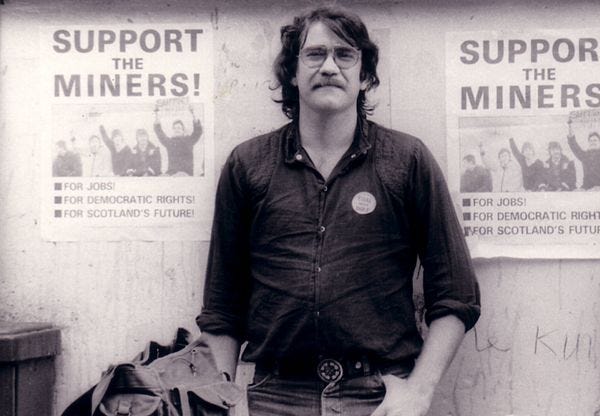
Earlier in the week I listened to this Travelling Folk Dick Gaughan special. It’s excellent. You can listen to it on the Radio Scotland website here. It is also on the BBC Sounds App.
The Dick Gaughan Legacy Project is doing great work and now have a website which can be viewed here.
Any excuse for a Dick Gaughan song…
Mendelssohn in Edinburgh
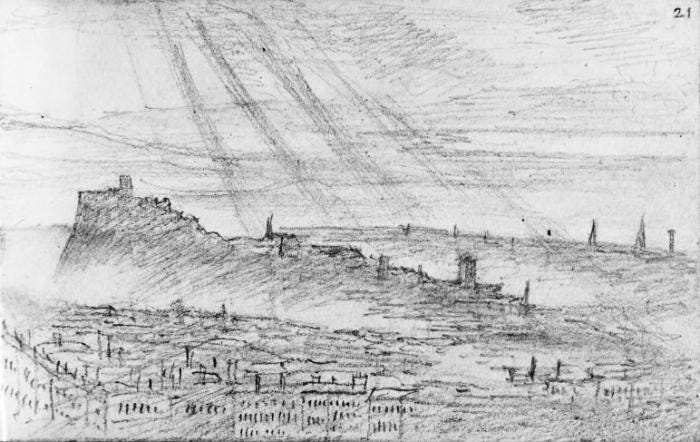
On this day in 1829 young composer Felix Mendelssohn arrived in Edinburgh and crossed the Meadows before climbing Arthur’s Seat. Where he sketched the above drawing of the city skyline. We know this from his letters home from Edinburgh. I am somewhat fascinated by Mendelssohn and his many connections to Edinburgh over the centuries (as people who attended me Faust and Furious talk on art, class and change in Edinburgh will confirm!).
Goethe (someone else who fascinates me) described 11 year old Felix Mendelssohn as superior to Mozart. His grandfather was the famous Jewish philosopher, Moses Mendelssohn, who once beat Immanuel Kant in an essay competition, and his sister Fanny was also a talented composer and pianist. In a 1925 letter to Felix, Goethe, wrote, “Give my regards to your equally talented sister”.
Apart from visiting Walter Scott, touring and sketching, Mendelssohn was always thinking as a composer. After visiting Holyrood Palace her wrote:
‘In the twilight we went to the palace where Queen Mary lived and loved; a little room is shown there with a winding staircase leading up to the door; up this way they came and found Rizzio in that little room, pulled him out and three rooms off there is a dark corner, where they murdered him. The chapel close to it is now roofless, grass and ivy grow there, and at that broken altar Mary was crowned Queen of Scotland. Everything round is broken and mouldering and the bright sky shines in. I believe I found today in that old chapel the beginning of my Scotch symphony.’
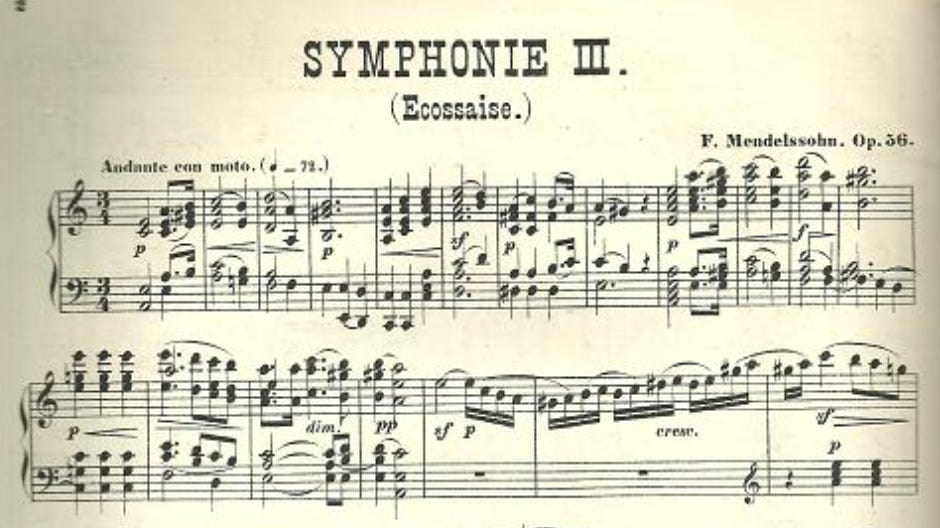
Mendelssohn’s famous Scottish Symphony was born.
Below is portrait of Felix Mendelssohn by Scottish artist Thomas Duncan painted during his visit in 1829. It is possible Mendelssohn sat for Duncan in Edinburgh. Duncan relocated from Perth to Edinburgh’s New Town around this time and Mendelssohn stayed in the New Town during his visit to the city. Although it is also possible it was painted in Perth after Mendelssohn left Edinburgh for his tour of the Highlands.
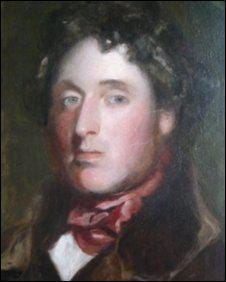
Felix Mendelssohn died aged 38. His sister Fanny died (while rehearsing one of her brother’s cantatas) aged 42. Thomas Duncan died aged 36.
Frantz Fanon at 100
The centenary of Frantz Fanon’s birth was earlier this month. This is an interesting piece on his famous work, The Wretched of the Earth, published to mark the anniversary.
The central concern of The Wretched of the Earth is not merely how colonialism is to be overthrown, but what kind of society should emerge in its aftermath. For Fanon, the form that the anti-colonial struggle takes – and, crucially, who participates in and leads it – is decisive in shaping the post-colonial future. His project, then, is a class analysis of the colonised world, an attempt to map the contradictory and uneven terrain of colonial societies in order to understand both the possibilities and the limitations of revolutionary transformation.
Your support is invaluable. If you enjoy the newsletter and articles and podcasts, I would greatly appreciate if you subscribed to a monthly/yearly pledge to support my work.
Alternatively, you can tip here: buymeacoffee.com/solidaritynotcharity
More on Al Qaeda and the British State
Previously on the newsletter we had looked at the British State’s role in the fall of Syria to HTS/Al Qaeda/ISIS. Well, there has been developments. As has been reported in a few newspapers, but is covered much more comprehensively here by Kit Klarenberg, we now know a bit more detail on the role of Jonathan Powell and his front charity.
Speculation has abounded about which “non-governmental organisation” was responsible for assisting the group, and Sharaa in its crusade. On May 22nd, Independent Arabia revealed the firm in question was Inter-Mediate.
The Arabic-language report - and its significance - was noticed by few in the West, with the notable exception of independent journalist Vanessa Beeley. Inter-Mediate was founded in 2011 by Jonathan Powell, chief of staff to then-British Prime Minister Tony Blair 1997 - 2007. In November 2024, mere days before HTS took power in Syria, he became current premier Keir Starmer’s National Security Advisor, “coordinating all UK foreign policy, security, defence, Europe, and international economic issues from 10 Downing Street.”
Meanwhile in Ireland…
A former BBC journalist who exposed the involvement of MI5 in concealing evidence of abuse at the Kincora boys’ home in Northern Ireland was repeatedly placed under electronic surveillance by the police and intelligence services, it is claimed.
The Investigatory Powers Tribunal (IPT) is investigating allegations that the Police Service of Northern Ireland (PSNI) and MI5 unlawfully spied on the phone communications of Chris Moore, a former reporter with the BBC’s Spotlight programme, who has reported about police collusion with terrorist organisations.
Edinburgh Festival.
